The best time to visit Shuklaphanta National Park is from October to March, when the weather is cool and dry and the birding is at its best. For easy wildlife viewing, February to June is excellent too, because the short grass and drying waterholes make animals easier to find. Safaris usually stop for the monsoon from early July and reopen around October.
Shuklaphanta month by month
| Month | Weather | In the park | Our verdict |
|---|---|---|---|
| October | Warm days, clear skies after the rains | Safaris reopen. Fresh green grassland | Great |
| November | Mild days, cooler nights | Migratory birds begin to arrive | Excellent |
| December | Cool, often foggy mornings | Migrant birds in numbers, animals near water | Excellent |
| January | The coldest month, with morning fog | Peak wildlife season. Dress warmly | Excellent |
| February | Cool mornings, pleasant days | Grass is cut and burned, so views open up | Excellent |
| March | Warm and pleasant | Good sightings, and many birds start breeding | Great |
| April | Hot afternoons | Short grass and shrinking waterholes | Very good |
| May | Hot, with humid spells | Animals gather at water. Go out early | Good |
| June | Very hot, then first rains | Last drives before the monsoon | Fair |
| July to September | Heavy monsoon rain | Safari closed, as tracks flood | Avoid for safari |
The best time for what you want to see
Swamp deer (barasingha)
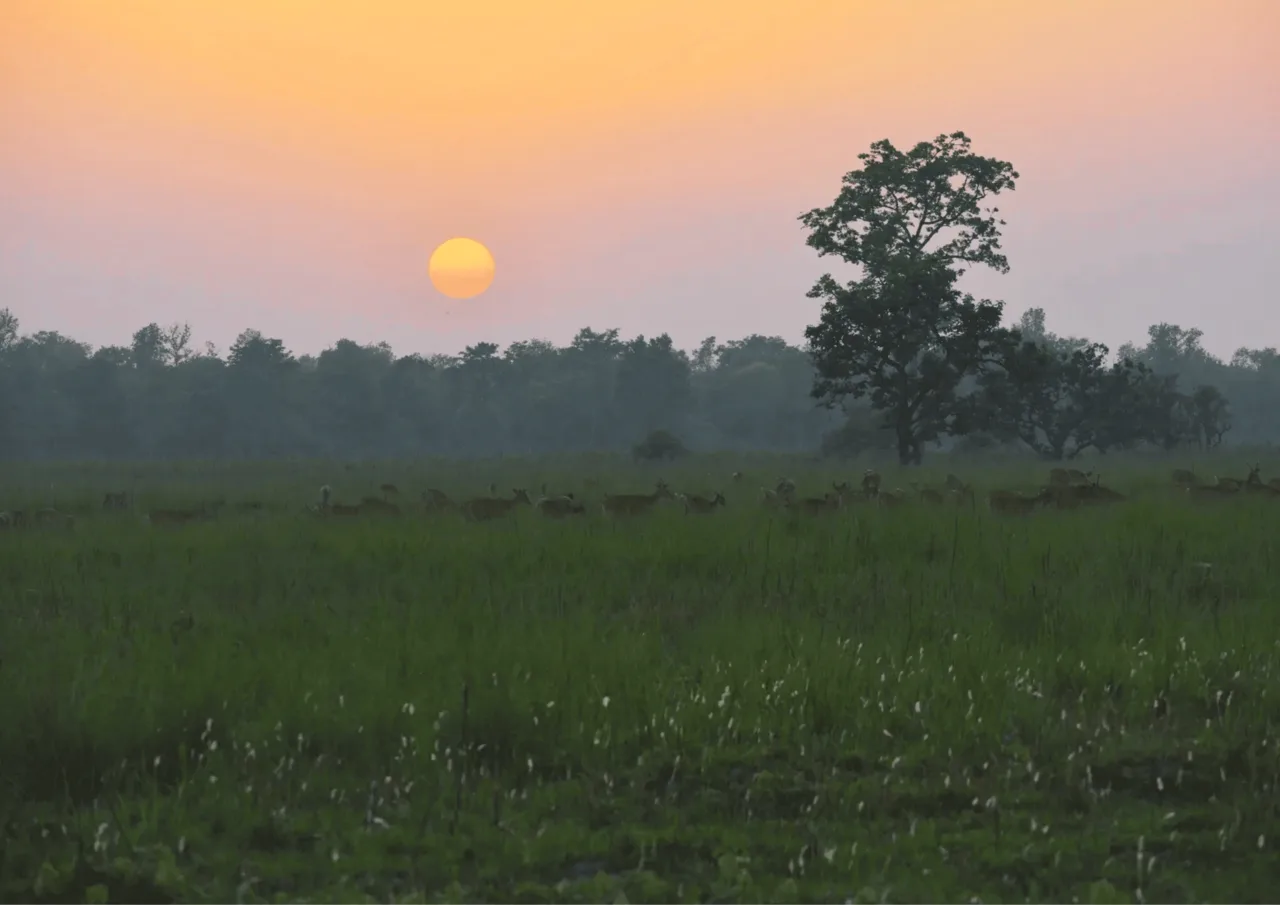
You can see the herds on the open phanta through the safari season. Winter and spring are especially good, when the grass is short. Shuklaphanta is home to more than 2,300 swamp deer.
Tigers and big animals
From December to February, and again from March as the land dries out, you have your best chance. Tigers are never guaranteed, but early starts help. Staying at the park gate gets you inside at first light.
Bird watching
October to March is best, when winter migrants join the resident species. Early mornings from 6 to 9 AM give the most sightings. See our Shuklaphanta bird watching guide.
Photography
Choose October and November for clear air and green landscapes, or winter for misty sunrises. Sunset from the rooftop is a highlight in any season.
Families
October, November, February and March have the most comfortable temperatures for children, without the coldest mornings or hottest afternoons.
Quiet travel
Shuklaphanta is uncrowded all year. Domestic travel rises around the Dashain and Tihar festivals, so book rooms early if you are coming in October or November.
What to pack by season
- October to November: light layers and a thin jacket for early drives.
- December to February: warm jacket, hat and gloves. Open jeeps get cold at dawn.
- March to June: sun hat, sunglasses, sunscreen and plenty of water.
- Any season: binoculars, a zoom lens and clothing in neutral colours.
Quick answers
What is the best month to visit Shuklaphanta?
November and February are the most balanced months, with comfortable weather, good wildlife viewing and plenty of birds.
Is Shuklaphanta open during the monsoon?
Jungle safaris usually stop from early July, when rain floods the tracks, and reopen around October. For 2026–27 they reopened in mid-October 2026.
How cold is Shuklaphanta in winter?
Days are pleasant, but mornings are cold and often foggy, especially in an open jeep. Bring warm layers.
How many days do I need?
Two nights gives you time for a morning and an afternoon safari. Three nights lets you add birding, a nature walk and a Tharu village visit.
Keep planning your trip
Sources: seasons from our own experience at the park gate. Safari dates from eKantipur reports on the July 2026 closure and October 2026 reopening.