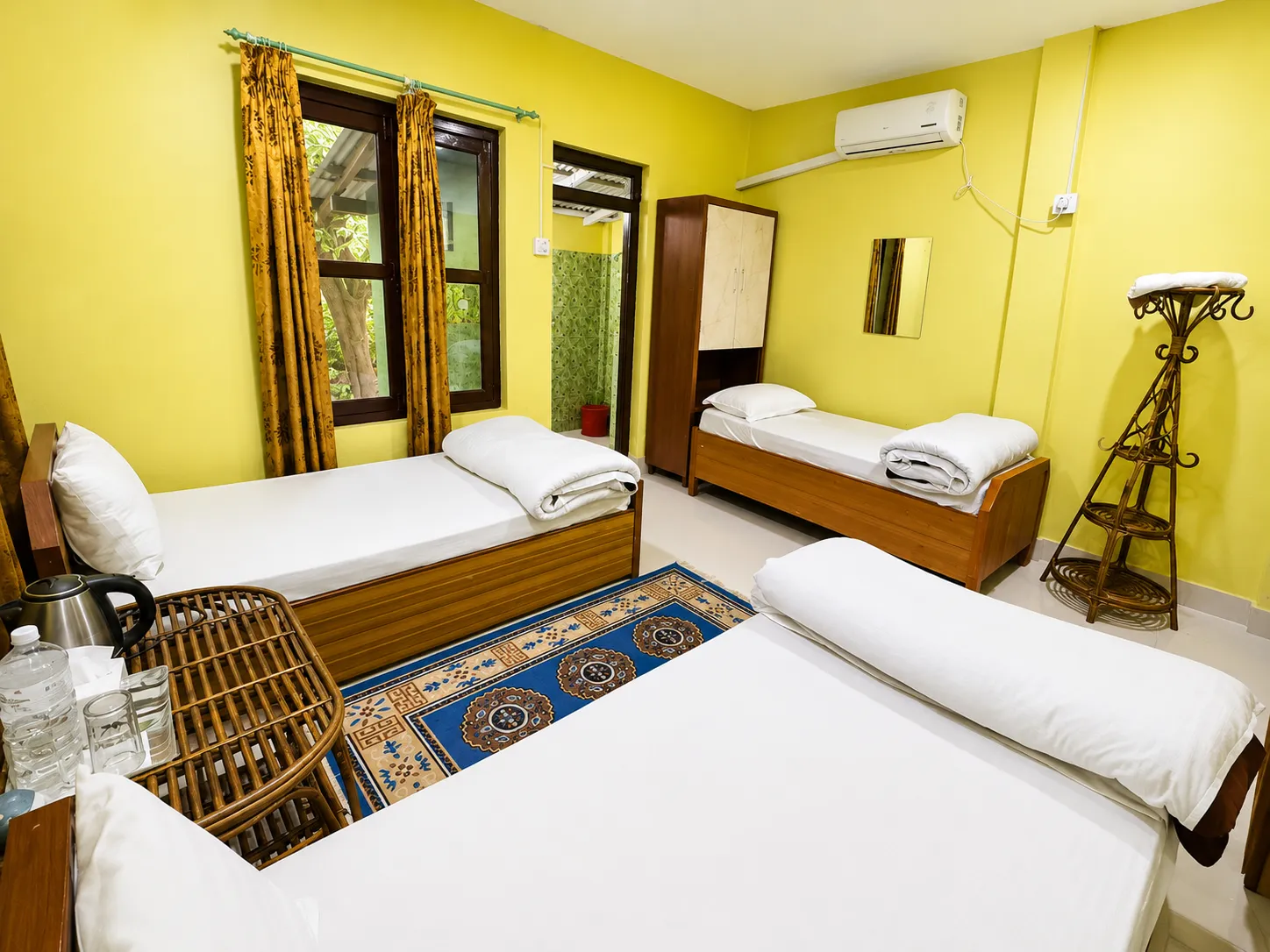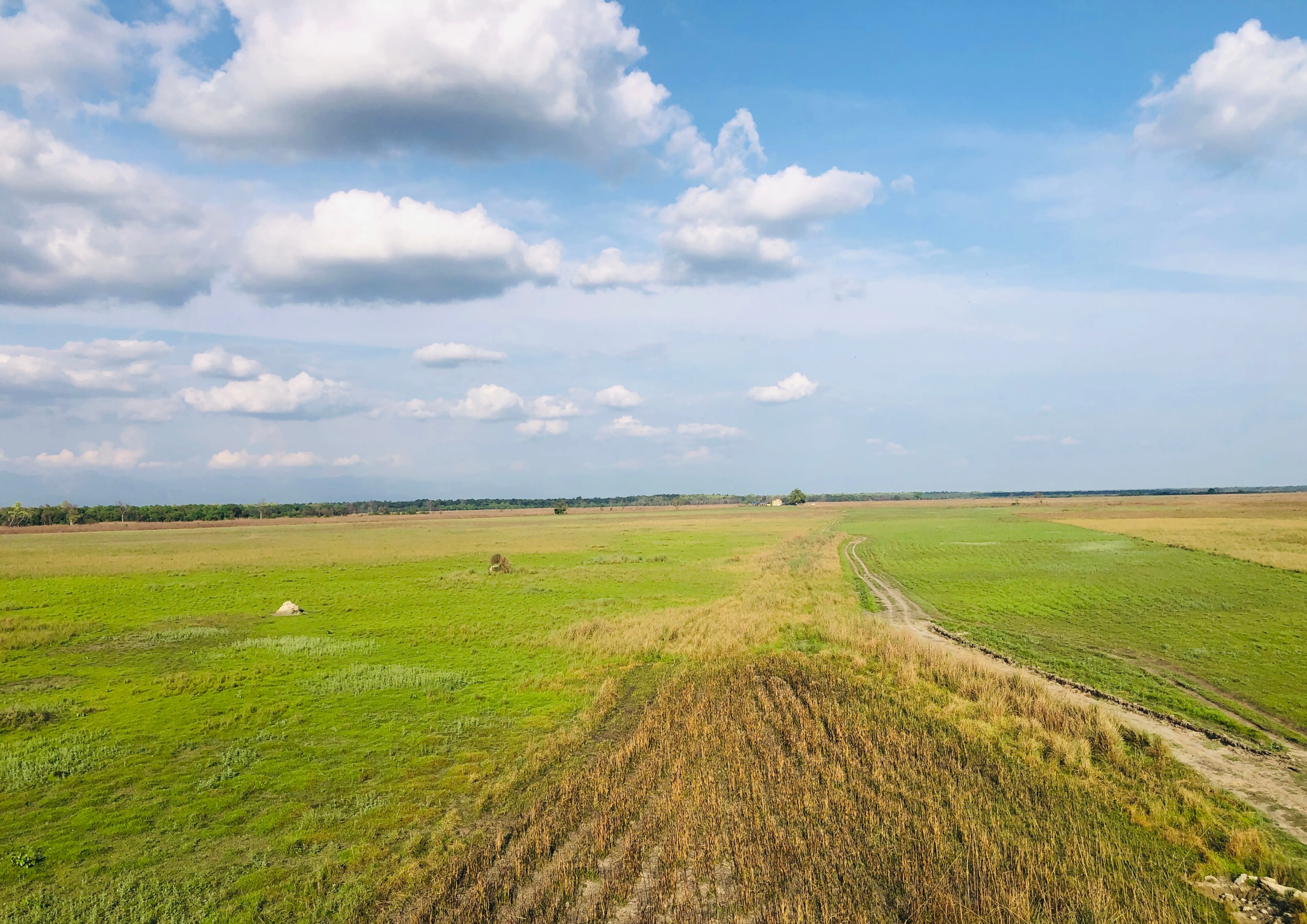
Shuklaphanta (also written Suklaphanta or Shukla Phanta) National Park is the quietest of Nepal's big Terai parks: 305 sq km of open grassland and sal forest in Kanchanpur, right on the Indian border. We live 200 metres from its main gate, so this guide answers the questions our guests ask most before they book.
1. When is the Shuklaphanta safari open?
Jungle safaris inside the park stop for the monsoon. The park usually closes to safari vehicles in early July, when rain floods the grassland tracks, and reopens once they dry out, usually in October. For the 2026–27 season, safaris reopened in mid-October 2026.
- October to November: fresh post-monsoon greenery and clear mountain views. A good start to the season.
- December to February: cool, often foggy mornings and the best wildlife viewing as the tall grass is cut and burned. Bring warm layers for early drives.
- March to June: hot afternoons, but the short grass and drying waterholes make animals easier to spot. Great for birding.
For a month-by-month look at weather and wildlife, see the best time to visit Shuklaphanta.
2. Park entry fees and permits
Every visitor needs a park entry permit, bought per person per day at the ticket counter at the park entrance. The Department of National Parks and Wildlife Conservation publishes these rates for Shuklaphanta:
| Visitor | Entry fee per person, per day |
|---|---|
| Foreign nationals | Ask us for the current rate |
| SAARC nationals | Rs 750 |
| Nepali citizens | Rs 100 |
Jeep hire, guides and other activities are charged separately from the entry permit. Our safari packages include the park entry fee. Fees are revised from time to time, so treat these as a guide and check the latest rate at the gate. We can arrange the jeep, guide and permits for you. See our jeep safari or see our safari packages.
3. What a safari day looks like
Safaris run as morning and afternoon drives, when animals are most active. Our jeep leaves from the cottage and is inside the park within minutes, so you spend your time on wildlife, not on the road.
What you might see
Shuklaphanta is home to the world's largest herd of swamp deer (barasingha), along with spotted deer, wild boar, Bengal tigers, leopards, Asian elephants and more than 460 species of birds, including the rare Bengal florican and sarus crane. The open phanta grasslands give long, clear views that forest parks rarely offer.
What to bring
- Binoculars, and a camera with a zoom lens
- Neutral clothing in green, khaki or brown. Avoid bright colours.
- A warm jacket and hat for winter mornings (December to February)
- Sunscreen, sunglasses and drinking water for spring drives
- Your passport or ID for the entry permit
4. Getting here from India
Shuklaphanta is one of the easiest Nepali parks to reach overland from India. The Banbasa (Uttarakhand) to Gaddachauki / Mahendranagar (Nepal) border crossing is about 5 km from Mahendranagar (Bhimdatta), and our cottage is a short drive beyond the town.
- On foot or by cycle-rickshaw: the simplest way to cross. Pedestrians have fewer timing restrictions than vehicles.
- By car: vehicle crossing has fixed hours and is sometimes suspended when the Mahakali River runs high, as happened in September 2026.
- Paperwork: check the visa and ID rules for your nationality before you travel. Indian citizens need valid photo ID.
Coming from Kathmandu, Dhangadhi Airport or Delhi? See our full guide on how to reach Shuklaphanta, or our contact page for the airport shuttle.
5. Shuklaphanta vs Chitwan vs Bardia
All three are excellent Terai wildlife parks. Which suits you depends on what you want from the trip:
| Shuklaphanta | Chitwan | Bardia | |
|---|---|---|---|
| Crowds | Very few visitors. You often have sightings to yourself. | Nepal's busiest park | Moderate |
| Signature wildlife | World's largest swamp deer herd, grassland birds | One-horned rhino | Tiger tracking |
| Landscape | Wide open phanta grasslands | Forest and rivers | Forest and the Karnali River |
| Getting there | Fly to Dhangadhi, or cross from India at Banbasa | Fly to Bharatpur, or drive from Kathmandu | Fly to Nepalgunj |
| Best for | Quiet wildlife trips, birders, overland travellers from India | First-time visitors on a short itinerary | Travellers focused on tigers |
Many travellers combine Shuklaphanta with Bardia on a Far-Western Nepal trip. Ask us if you'd like help planning the route.
6. Quick answers
When is the Shuklaphanta jeep safari open?
Usually from October to the end of June. It closes for the monsoon, usually from early July. For 2026–27 it reopened in mid-October 2026. Message us to confirm before you travel.
How much is the park entry fee?
Rs 750 for SAARC nationals and Rs 100 for Nepali visitors, as published by the national parks department. Foreign visitors should ask us for the current rate. Jeep hire is charged separately.
Can I reach Shuklaphanta from India?
Yes. Cross at Banbasa to Gaddachauki / Mahendranagar, about 5 km from town. Vehicle hours are restricted, so check before you travel.
How far is Shuklaphanta Jungle Cottage from Mahendranagar and the airport?
We are 200 metres from the park's main gate, about 6 km from Mahendranagar (Bhimdatta) and about 57 km (roughly 1 hour 20 minutes) from Dhangadhi Airport.
Is Shuklaphanta better than Chitwan or Bardia?
It depends on your trip. Shuklaphanta is the quietest of the three, with huge swamp deer herds and open grasslands. Chitwan is the most developed and easiest from Kathmandu. Bardia is known for tiger tracking.
Sources: entry fees from the DNPWC Shuklaphanta brochure. Safari season from eKantipur reports on the July 2026 closure and October 2026 reopening.